Welcome to Thunder Bay
National Marine Sanctuary

What?
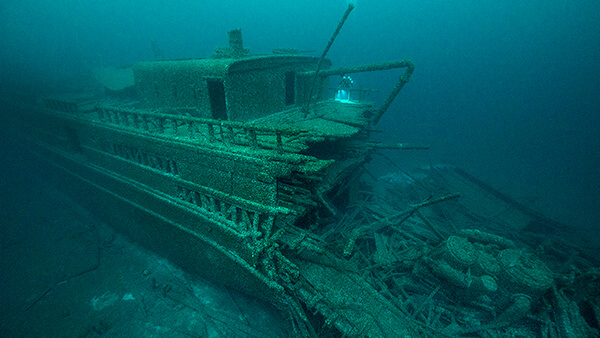
The Thunder Bay National Marine Sanctuary is the thirteenth national marine sanctuary in a system that extends from American Samoa to Massachusetts. Thunder Bay National Marine Sanctuary was established to protect a nationally significant collection of over 100 shipwrecks, spanning over a century of Great Lakes shipping history. Thunder Bay National Marine Sanctuary represents many "firsts" for the National Marine Sanctuary Program:

  • First Great Lakes sanctuary.
  • First sanctuary to focus solely on a large collection of underwater cultural resources.
  • First sanctuary located entirely in state waters.

For more information, see Shipwrecks.

Where?
The Thunder Bay National Marine Sanctuary encompasses 448 square miles of northwest Lake Huron, off the northeast coast of Michigan's Lower Peninsula. The landward boundary of the sanctuary is marked by the northern and southern limits of Alpena County, and the sanctuary extends east from the lakeshore to longitude 83 degrees west. The largest city in the vicinity is Alpena.

Why?
NOAA's National Marine Sanctuary Program focuses on protecting our nation's marine resources - both natural and cultural. Before NOAA can designate a national marine sanctuary, the proposed sanctuary must be shown to contain resources of "special national significance" because of their conservation, recreational, ecological, historical, research, educational, or aesthetic qualities.

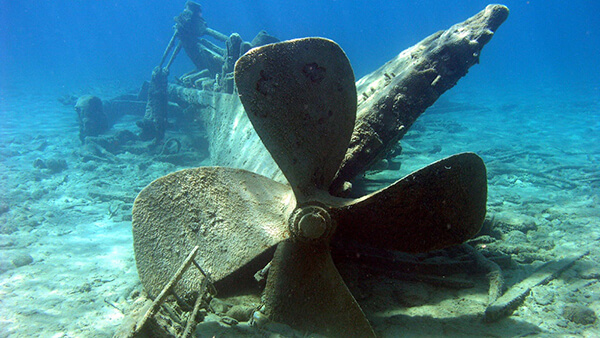
The addition of Thunder Bay to the sanctury system enhances NOAA's management of underwater cultural resources in a number of ways. Lake Huron's cold, fresh waters have created a remarkable state of shipwreck preservation that is unmatched by the other sanctuaries' saltwater environments. Thunder Bay's collection of shipwrecks represents the diversity of vessels that navigated the Great Lakes in the 19th and 20th centuries. These sunken ships reflect transitions in vessel architecture and construction while conveying stories of Great Lakes transportation and commerce. The known wrecks rest as close to the surface as 12 feet and as deep as 180 feet. Some of the wreck sites remain largely intact while other sites are only remnants of vessels' boilers, engines, rudders, windlasses, and anchors. However, the known wrecks are only a small section of the total wreckages that have occured. Many of the wrecks remain undiscovered.

These vessels still have stories to tell of Great Lakes maritime history and commerce, from the earliest explorations to westward expansion in the 1800s and modern day lake trade. Through exploration, education, and research, the Thunder Bay National Marine Sanctuary will bring to the American public the lore of Great Lakes maritime heritage.

For more information, see History of the Sanctuary and Shipwrecks.

Who?
NOAA and the State of Michigan have established a partnership to cooperatively manage the sanctuary's underwater cultural resources. A 15-member Sanctuary Advisory Council representing the local communities has provided recommendations to NOAA and the State of Michigan concerning sanctuary management.

For more information, see Designation Process or a Detailed Timeline.

How?
Sanctuary activities focus on resource protection, education, and research. Priority activities include placing mooring buoys at identified shipwrecks, initiating an inventory and documentation of shipwrecks, and developing a maritime heritage education program.

National Oceanic and Atmospheric Administration
Revised July 12, 2007 by TBNMS Webmaster | National Marine Sanctuary Program | For Employees | National Marine Sanctuary Foundation
Many links leave the National Marine Sanctuary Web Site - please view our Link Disclaimer for more information
National Ocean Service | National Oceanic and Atmospheric Administration | U.S. Department of Commerce | NOAA Library | Privacy Policy
Contact Us | http://sanctuaries.noaa.gov /about/welcome.html